
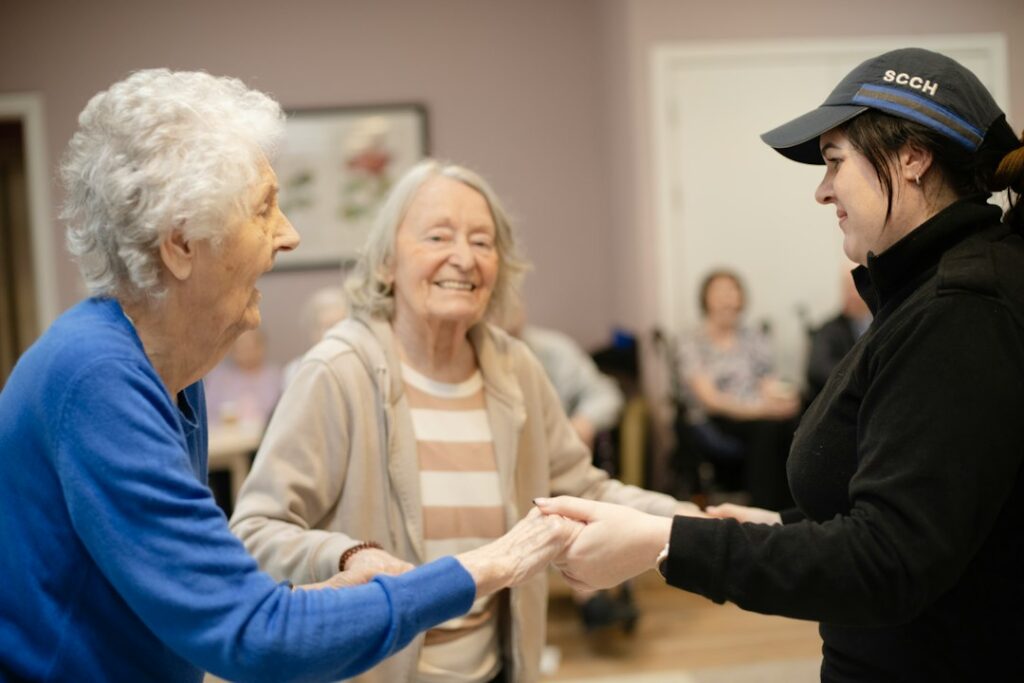
Assisted living visitor policies are designed to balance residents’ independence, family connections, privacy, and health and safety. In Sharpsburg, PA, residents and families should expect rules that explain visiting hours, sign-in procedures, overnight guests, children, pets, illness precautions, and what happens during emergencies.
Policies differ by residence, so the written handbook or move-in agreement is the most reliable source for a specific building. Still, most assisted living communities address the same practical questions.
Can family members visit whenever they want?
Usually, visits are allowed during established visiting hours, but many communities offer flexibility for close family members. A residence may ask visitors to arrive during daytime or early evening hours, especially if residents receive help with bathing, medications, meals, or bedtime routines.
Some buildings use open visiting policies, while others limit access to certain hours or require visitors to use a monitored entrance. A resident may also be able to receive a late visit if staff are notified in advance.
Residents should ask:
- What are the regular visiting hours?
- Can a family member visit early in the morning or later in the evening?
- Are unscheduled visits allowed?
- Does the resident need to approve each visitor?
- Are visitors permitted in common areas after regular hours?
A policy should not prevent a resident from maintaining meaningful relationships, but it may establish reasonable limits that protect sleep, privacy, and building security.
Do visitors have to sign in?
Most assisted living residences require visitors to sign in and out. This may be done at a front desk, reception area, tablet, paper log, or secured entry system.
Sign-in procedures help staff know who is in the building if there is a fire, severe weather event, medical emergency, or other evacuation. They also discourage unauthorized access and help protect residents who may be vulnerable to confusion, wandering, theft, or unwanted contact.
Visitors may be asked for:
- Their name and contact information
- The name of the resident they are visiting
- The time they arrive and leave
- A photo ID, especially during evening hours
- A reason for visiting if they are not a regular guest
A resident’s privacy should be respected during this process. Visitors generally should not be expected to discuss private medical information at a public reception desk.
Are visitors allowed in a resident’s apartment?
In many communities, residents can invite guests into their private apartment or room. The resident’s living space is treated as a personal area, although staff may need access for scheduled care, maintenance, emergencies, or safety checks.
A visitor may need to follow rules about:
- Keeping walkways clear
- Not using medical equipment without permission
- Avoiding interference with care routines
- Respecting roommates in shared accommodations
- Following smoking, alcohol, and noise restrictions
- Leaving the room if personal care or medical assistance is being provided
Residents in shared rooms may have additional privacy concerns. A guest should respect the roommate’s comfort and schedule, particularly during rest periods or personal care.
Can visitors stay overnight?
Overnight guests may be permitted, but they are rarely treated the same as short daytime visits. The residence may require advance approval, registration, or a limit on the number of nights allowed.
Questions to clarify include:
- Is overnight lodging allowed in a private apartment?
- Is there a guest bed or other approved sleeping arrangement?
- Are overnight guests allowed in shared rooms?
- Is there an additional fee?
- Must the guest leave during emergency drills or care activities?
- Are guests permitted to use kitchen appliances or bathrooms independently?
A visitor who stays overnight is usually not considered a resident and cannot receive routine care, meals, medication assistance, or other services unless separately authorized under the residence’s procedures.
Are children allowed to visit?
Children are generally welcome when accompanied and supervised by a responsible adult. Assisted living communities may set limits on running, loud play, use of elevators, or access to medication rooms and staff-only spaces.
Visits with children can be especially enjoyable when planned around the resident’s energy level. Shorter visits may work better for someone who becomes tired easily, has hearing loss, or is sensitive to noise.
Adults should also explain basic safety expectations before arriving. Children should not handle walkers, wheelchairs, oxygen equipment, medications, emergency buttons, or other care-related items without permission.
What rules apply to pets?
Pet policies vary widely. Some residences allow household pets in private apartments, while others permit only visiting animals. There may be restrictions based on size, temperament, sanitation, allergies, or the animal’s ability to remain under control.
A visiting pet may need to:
- Stay on a leash or in a carrier
- Remain with the owner
- Avoid dining rooms and clinical areas
- Be current on required vaccinations
- Leave if it becomes disruptive or threatens another person
- Avoid contact with residents who are uncomfortable around animals

Service animals and assistance animals may be subject to different legal protections than ordinary pets. A residence should explain the process for requesting an accommodation without treating a disability-related animal as a regular pet.
What happens if a visitor is sick?
Visitors with fever, vomiting, diarrhea, a contagious respiratory illness, or a recent exposure may be asked to postpone the visit. This is especially important in assisted living because residents may have chronic health conditions or reduced ability to fight infection.
Temporary precautions can include:
- Masking
- Hand hygiene
- Temperature or symptom screening
- Visiting in a designated area
- Limiting visits to one or two people
- Avoiding shared dining and group activities
- Virtual visits when in-person contact is unsafe
Rules may become more restrictive during seasonal respiratory illness, outbreaks, or public health emergencies. Cold weather in western Pennsylvania can also lead to more time indoors, which may make infection-control practices especially relevant during winter.
Can a resident refuse a visitor?
Generally, a resident may decline a visit or ask a guest to leave, provided there is no immediate safety issue. Staff should help protect the resident’s privacy and personal choice.
Concerns may arise when a visitor is threatening, intoxicated, harassing, attempting to take money, or trying to make decisions without authorization. In those situations, staff may restrict access, require supervised visits, or involve emergency services if there is an immediate danger.
Family disagreements do not automatically give one relative the right to control another resident’s visitors. Decision-making authority depends on the resident’s wishes, legal documents, capacity, and applicable rules.
How are visits handled during emergencies?
During a fire, severe storm, extended power outage, infectious disease outbreak, or evacuation, normal visitor procedures may change. Visitors may be asked to leave the building, remain in a designated area, or help a resident only if staff determine that doing so is safe and appropriate.
Families should keep current contact information with the residence and ask how updates are communicated. In a dense, walkable community such as Sharpsburg, PA, relatives may live nearby, but they should not enter a building during an emergency unless staff or emergency officials permit it.
What should a resident do if a visitor policy seems unfair?
The first step is to request the policy in writing and ask which safety, privacy, or operational concern it addresses. A resident or representative can then request a meeting with the appropriate administrator or resident-services staff.
Useful questions include:
- Does the rule apply to everyone or only to certain visitors?
- Is the restriction temporary?
- Is there an appeal or grievance process?
- Can reasonable accommodations be considered?
- How will the policy affect the resident’s privacy and relationships?
A clear visitor policy should be understandable, applied consistently, and updated when circumstances change. Residents and families should review it before move-in and again whenever there is a change in health needs, household members, or emergency procedures.
